Submersible bore pump upgrade improves irrigation reliability on NSW cotton farm
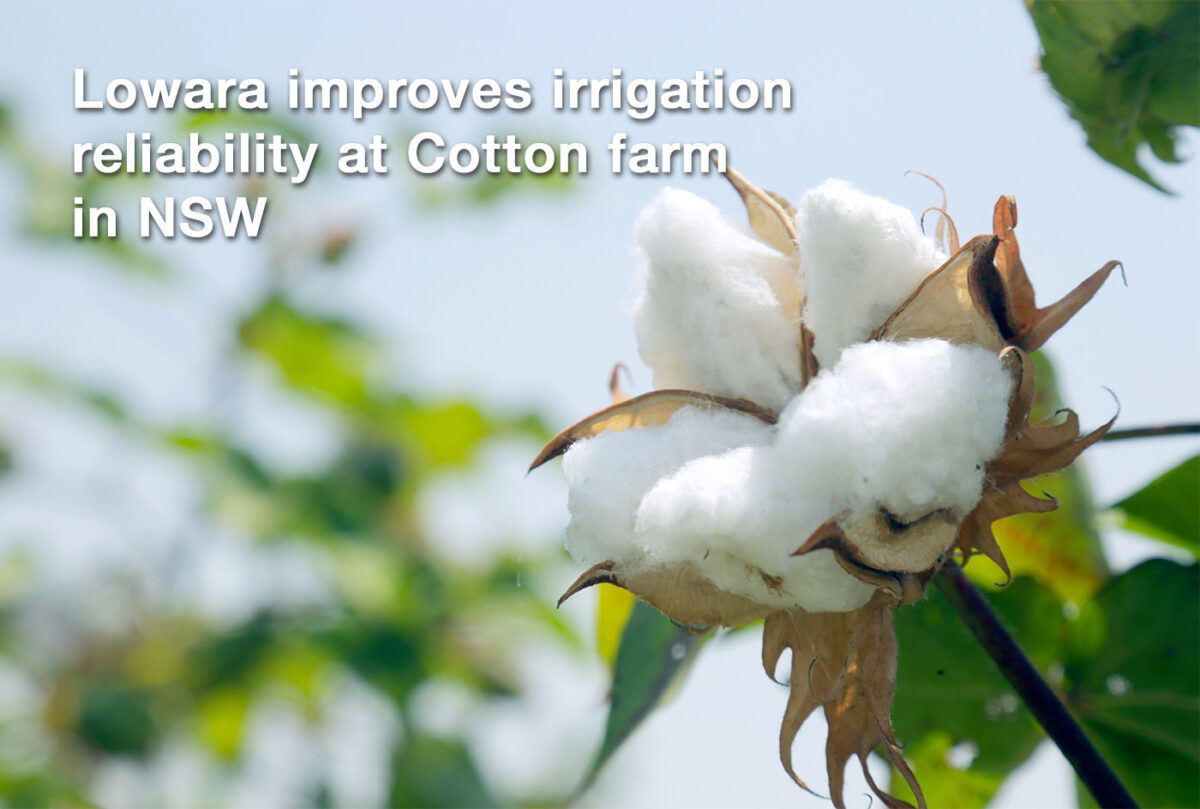
When a single bore is the only water source for a group of cotton paddocks, pump reliability becomes critical. A pump failure does not just interrupt operations, it can stop irrigation altogether.
Flood-irrigated cotton depends on the timely movement of large volumes of water. For growers relying on groundwater, the bore and pumping system must be able to deliver high flows consistently during irrigation windows. Any unplanned downtime can quickly affect watering schedules and crop management.
A single-source bore without grid power
At a family-owned cotton farm near Baan Baa, NSW, a single groundwater bore supplies a group of flood-irrigated paddocks. The site has no grid power, and there is no alternative water source available to those fields. That combination placed heavy demands on the pumping system, which needed to deliver high flows reliably while operating from diesel power.
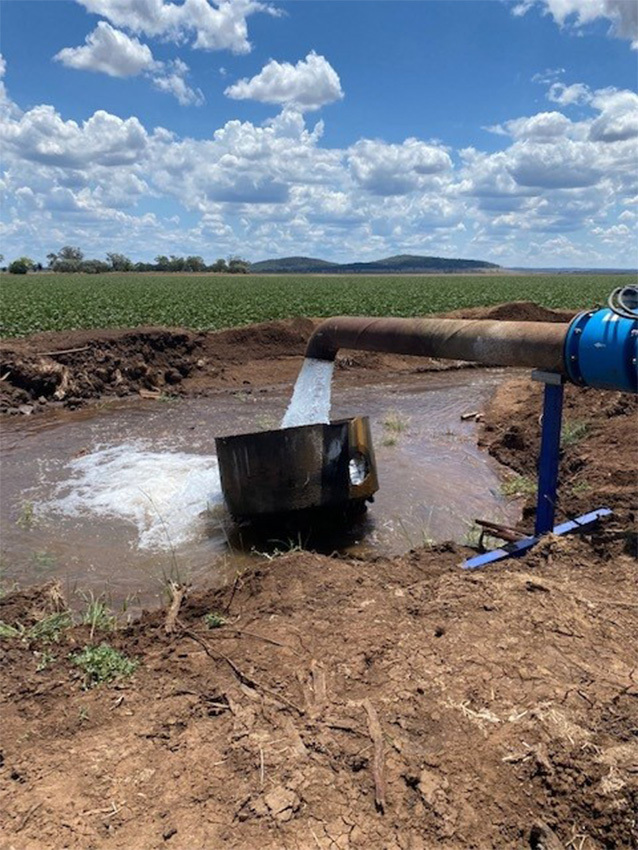
“The fields that are directly irrigated by that bore, I can’t get water there any other way,” explains farm owner Jack Maunder. “As soon as the pump breaks down, you can’t get water for irrigation.”
The bore had previously been fitted with a diesel-powered turbine pump, driven from the surface by a shaft running down to the pump. Over time, the system became increasingly unreliable, with repeated repairs and maintenance failing to resolve the issue.
“I kept having trouble with shafts breaking, right up the top near the pump head,” Jack recalls. “It was on and off over a five-year period - we probably broke down three times. Enough was enough.”
With the turbine system failing, the farm needed a more reliable way to operate the bore – one that could handle the demands of flood irrigation without repeated breakdowns.
Reducing mechanical complexity
Baker Pump Repairs in Narrabri, in conjunction with Brown Brothers Engineers, moved away from the diesel-driven turbine arrangement and installed a new borehole pumping system for the site.
The upgrade centered on a 10-inch submersible bore pump selected for high-flow groundwater duty. A Lowara Z Series Z10272-2 pump was installed with a 75 kW Saer 8-inch submersible motor, providing a simpler pumping arrangement suited to long-term operation in irrigation bores.
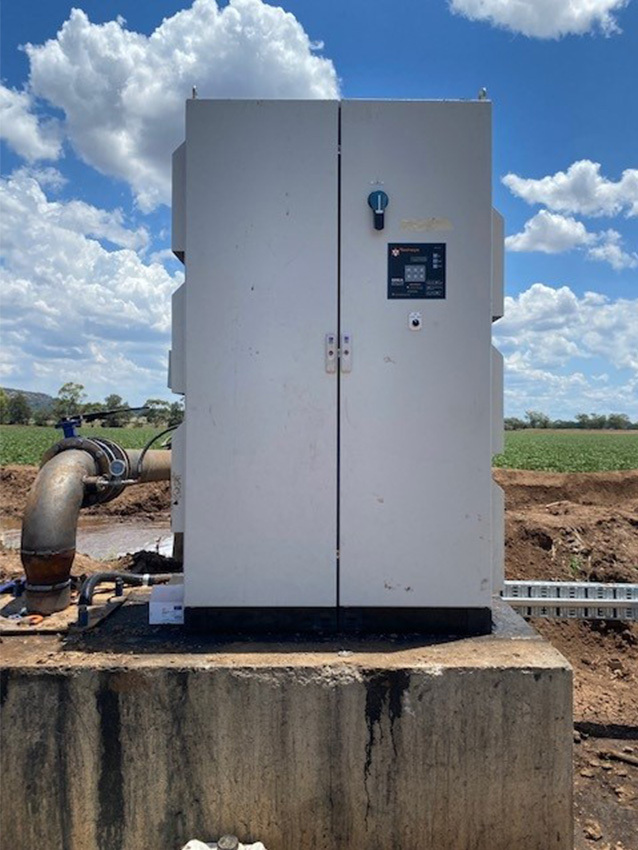
A 90 kW Techsys variable speed drive (VSD) control panel, fitted with a sine wave filter, was installed to manage motor operation and help protect the submersible motor and cable. The VSD also gives the grower greater control over pump speed, allowing flow and head to be better matched to irrigation requirements.
With no grid power available at the site, the new system still uses diesel as the energy source. However, instead of mechanically driving a turbine pump from the surface, a diesel generator now supplies power to the submersible motor and control panel.
This changes how the bore is controlled. Under the previous setup, pump speed was tied to engine speed. With the new system, the VSD controls the pump electronically, giving the farm more flexibility to match output to the required flow and head.
The decision to opt for a submersible pump over installing another turbine pump came down to proven performance in the past.
“We went to a submersible pump on another bore site a few years prior – it would be maybe ten years old now,” Jack says. “Since then, we’ve probably only ever had one drama with it, a motor burnout. It was definitely a lot less maintenance – less mucking around with drip oils and a lot less wear and tear.”
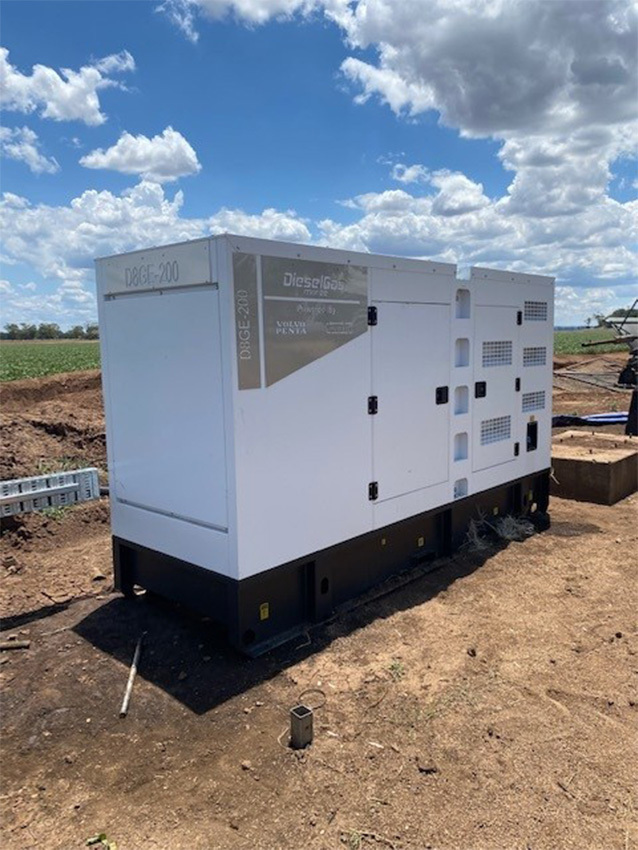
While fuel consumption has remained similar to the previous turbine setup, the new submersible arrangement has reduced mechanical complexity and removed the line shaft arrangement that had been the source of repeated failures in the past.
For a farm relying on a single bore to water those paddocks, the main gain is confidence. With fewer mechanical failure points and more flexible pump control, the grower has a more reliable way to keep water moving when irrigation is needed.