Pumping system supplies farm’s water needs
SNAPSHOT
- Project specifies four pumps for irrigation, stock and domestic supply
- Farm plan requires use of groundwater and exclusion of stock from river, which is treated as a conservation zone
- Groundwater is pumped into a holding tanks and then distributed for irrigation and domestic and stock use
- After a year the pumps are running as designed and energy bills are lower than expected
After buying a 16 ha farm near Eildon in Victoria that had a semi-established truffle orchard of 980 English oak and stone pine trees, the owner realised that there was some work to be done to ensure that the trees had access to irrigation water. As well, water was needed to supply stock and domestic needs.
While the simple option would have been to source water from the river that the farm fronted and to which it had riparian rights, the owner decided that fundamental to his property strategy was that he would not use river water or allow stock into the riparian zone.
Rather, he made a conscious decision not to draw water from the river but to leave it in its most natural state, which was as a significant natural habitat for many species of animals and plants.
After investigation, a groundwater source that could supply the 6 ML a year needed was found on the farm. The water was at a depth of 75 m and was drinking water quality.
The task for dealer Yves Gur from Idrill Ipump and installer Jamie Crowe from JWC Plumbing, both of whom are based in Melbourne, was to set up a pumping system that efficiently and reliably supplied water for irrigation as well as for stock and domestic use.
Pumps selected to suit supply needs
The project required that several different pumps be installed.
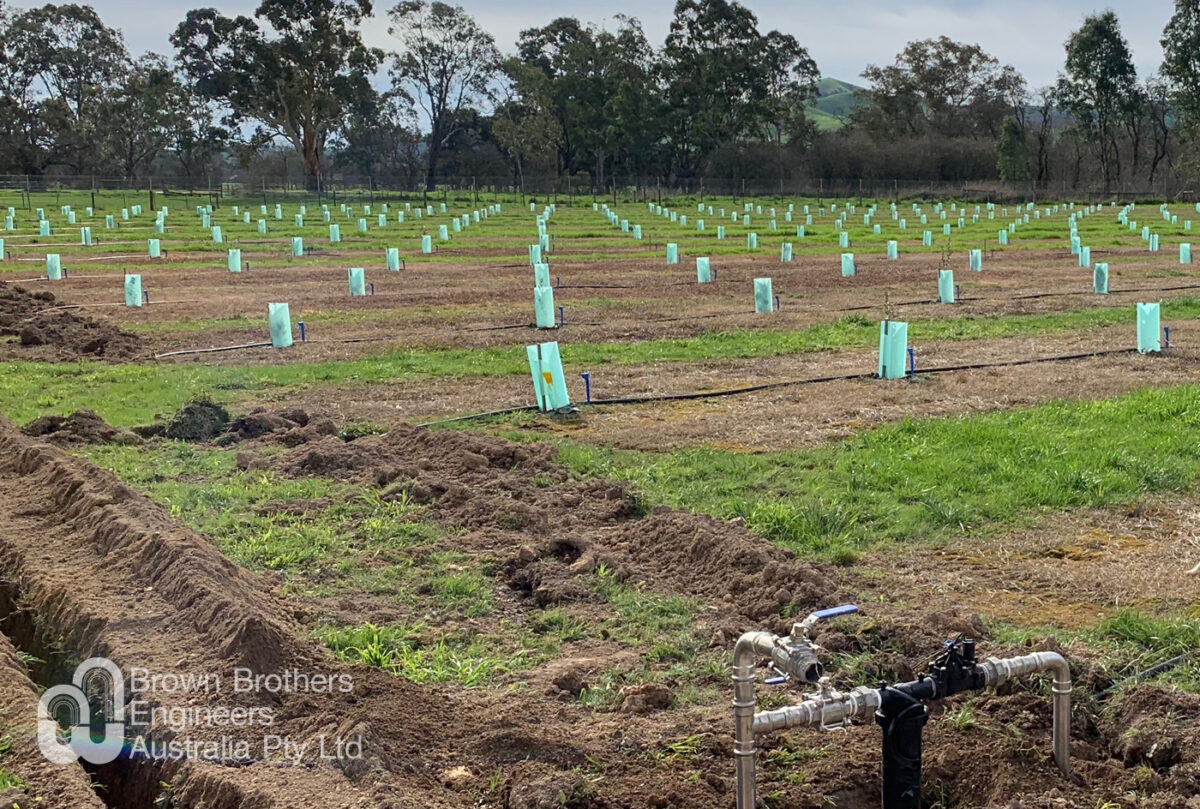
The first pump was to take water from the bore into a 250,000 L holding tank that was to be used as a supply for irrigation and stock and domestic uses. A transfer pump was then needed to take water to the plantation irrigation system 400 m from the tank.
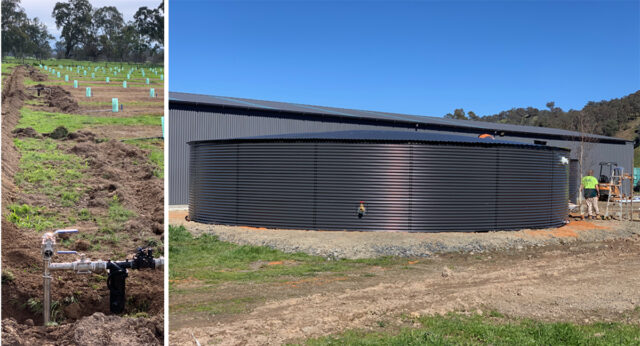
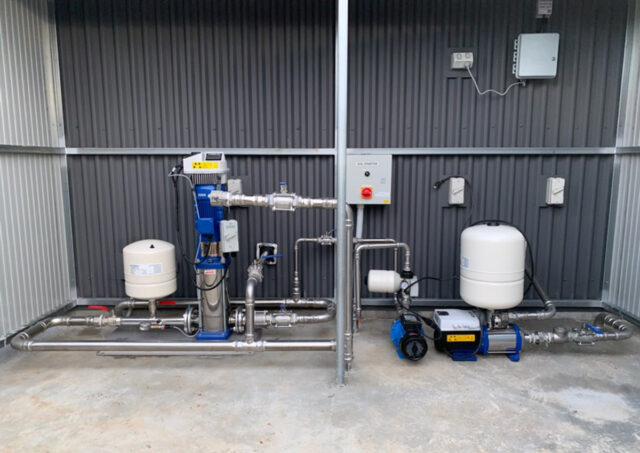
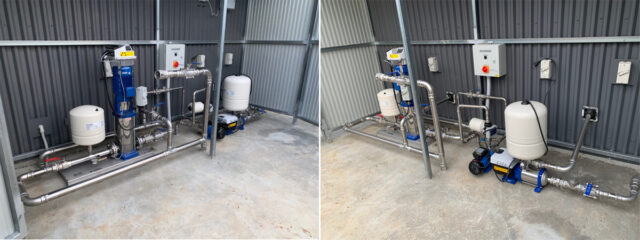
A Lowara bore pump acting on a float control was suggested for the bore, and a vertical, multi-stage booster pump for transferring water from the tank to the irrigation system.
The Lowara variable speed drive booster pump has more than enough pressure to supply 300+ small sprinkler heads at one time in the truffle plantation, as well as provide water for domestic garden irrigation. It is under constant pressure to the irrigation solenoids that are activated by a controller programmed with pre-set run times.
The controller has Wi-Fi ability so the whole system can be activated from the client’s phone no matter where he is or if a dry period is encountered during the season and extra watering is required.
A third pump, a Goulds’ jet pump, supplies water from the holding tank to stock troughs that are in five small grazing paddocks. This pump is fitted with additional equipment to limit cycling and enable auto start. The troughs were installed to keep stock away from the river and riparian zone in line with the client’s plan to maintain the river as a conservation area and to avoid riverbank erosion.
The fourth and final member of the pumping suite is a Lowara “Smart Pump” that currently supplies water to the work shed and is designed to also supply the farmhouse, when it is built. The smart pump allows great flexibility in operation, e.g. the operator can dial in a required pressure. This means that the pressure can be increased, when the both the farmhouse and shed are on-line.
Pumps haven’t missed a beat
Since they were installed in August last year, the pumps, which the client calls the “heart of the water supply system”, have not missed a beat and have supplied water efficiently when needed.
And the proof of its operation? Nearly a year on and the entire system is running as it was designed and with lower electricity bills than expected.
[Article originally appeared in the Irrigation Australia Journal]
Have a specific requirement?
We have the capability to custom-build a complete pump system to your specifications using any pump from our range.
Here are some examples of our work.