Innovative irrigation powers orchard expansion in Moree
Snapshot
- A New South Wales orchard near Moree has expanded from 500 ha to over 1,200 ha, shifting from cotton to oranges for better water efficiency and profitability.
- Greg Croft from Waterquip designed a flexible irrigation system with zoning to adjust for fertigation, harvesting, and crop management needs.
- Customised driplines manage a 30 per cent difference in water needs between shaded and sunlit sides of east-west tree rows, an uncommon layout in Australia.
- The system is fully remote-controlled, allowing real-time monitoring and adjustments from anywhere.
- Brown Brothers Engineers supplied Goulds ISO pumps and jockey pumps, boosting water capacity and efficiency, supported by a Netafim filtration system handling 2 million litres daily.
- Subsurface drip irrigation is being introduced to reduce maintenance costs, with plans for a third pumping station to support future growth.
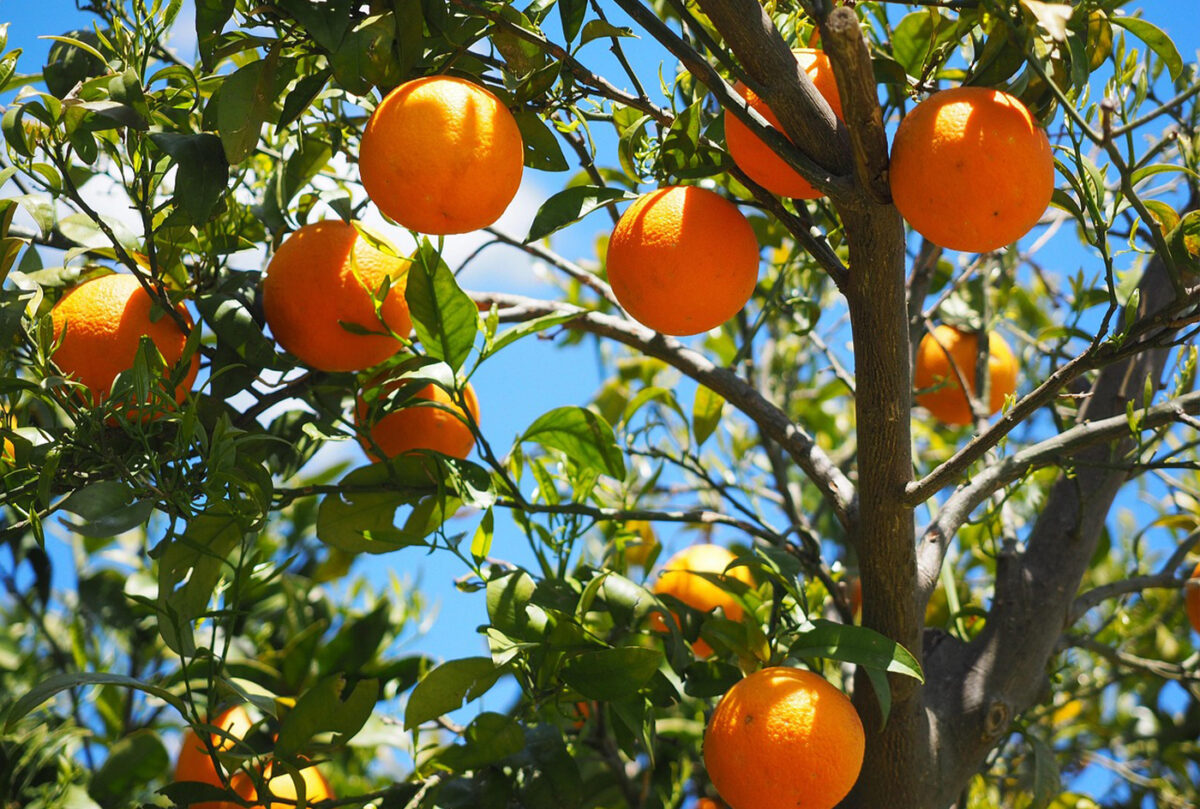
A recent orchard expansion in New South Wales demonstrates how flexible irrigation systems can support water efficiency and sustainable farming as operations grow. Located 10 km north of Moree, the 500 ha orange orchard has grown to more than 1,200 ha. Originally established as a cotton farm in 2001, the Australian-owned family business shifted to orange cultivation to achieve higher returns per megalitre of water, and it has continued to grow ever since.
Irrigation system overview
Greg Croft from Waterquip in Moree designed the irrigation system and managed the project. He characterises it as a highly technical design that provides medium flexibility, allowing the orchard to be divided into irrigation zones, or shifts. This flexibility enables adjustments to suit various operational needs, such as fertigation, harvesting, crop management and unexpected issues.
“It needs to be a flexible design because the irrigated area is being supplied by multiple bores,” Greg said. “If a couple of bores are out of service at peak times, we need to be able to change the fields in the shift and to be able to catch up when required.”
The system uses inline pressure-compensating drip irrigation to deliver up to 12 mm of water per day when needed. It consists of 27 mm driplines with 400 m runs, all managed with Netafim valves and filtration. For new plantings, a single dripline is initially installed, sufficient for the first three years. As trees mature, a second dripline can be added based on seasonal conditions and growth rates. The emitters are Netafim Uniram CML emitters in 23 and 25 mm sizes.
Blocks are configured as a combination of centre feed and end feed, depending on the landscape. The flow rate varies among blocks from between 63 m3/h to 93 m3/h.
Custom design for unique conditions
The orchard features east-west tree rows, an unusual practice in Australia but necessary in this instance to avoid impeding shallow floodwaters. This configuration requires a custom dripline approach to maintain even water distribution, compensating for a 30 per cent difference in water needs between the northern and southern sides of the trees caused by shading. To address this, the system uses the same flow rate on both sides but adjusts emitter spacing accordingly. Greg said, “Getting it right is a tricky balance. I’ve been doing this since 2001; it took me eight years to refine.”
The entire system is operated remotely, with capabilities for controlling fertigation, pumps, and monitoring flow and pressure. Alerts for high flow rates or pressure loss ensure the system is reliable and efficient.
Pumps

The project involved adding a second pumping station and doubling the orchard’s water capacity.
Brown Brothers Engineers supplied Goulds ISO end-suction pumps, which were were selected for their efficiency and reliable suction lift capabilities. Goulds ISO pumps were already in use at the orchard, so adding additional units for the expansion was an easy choice, according to Geoff Hall, area sales manager at Brown Brothers Engineers.
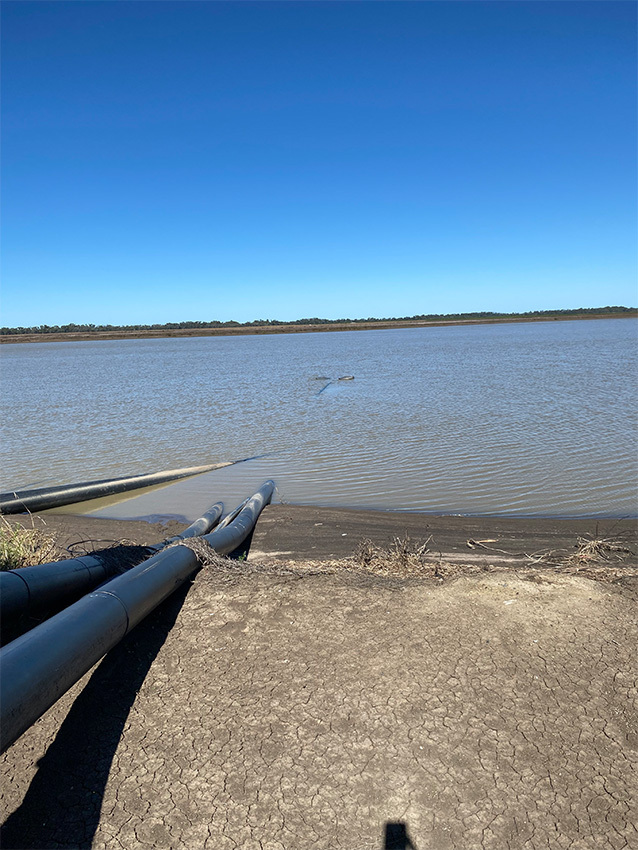
Each of the two main pumping stations includes two GISO Pumps (125 x 100-200) with 55 kW, 2-pole motors and jockey pumps for lower flow demands. Drawing water from an on-site dam, each of the GISO pumps has a duty rate of 85 L/s at 50 m, equating to approximately 7 ML daily, ensuring the orchard has a consistent, reliable water supply.
Jockey pumps are used for low flow demands, activating first to manage smaller volumes of water efficiently. These pumps are typically smaller and more energy-efficient than the main irrigation pumps, preventing them from cycling on and off frequently, which can lead to wear and tear. By handling low flow demands and minor pressure adjustments, they help reduce the overall energy consumption of the irrigation system.
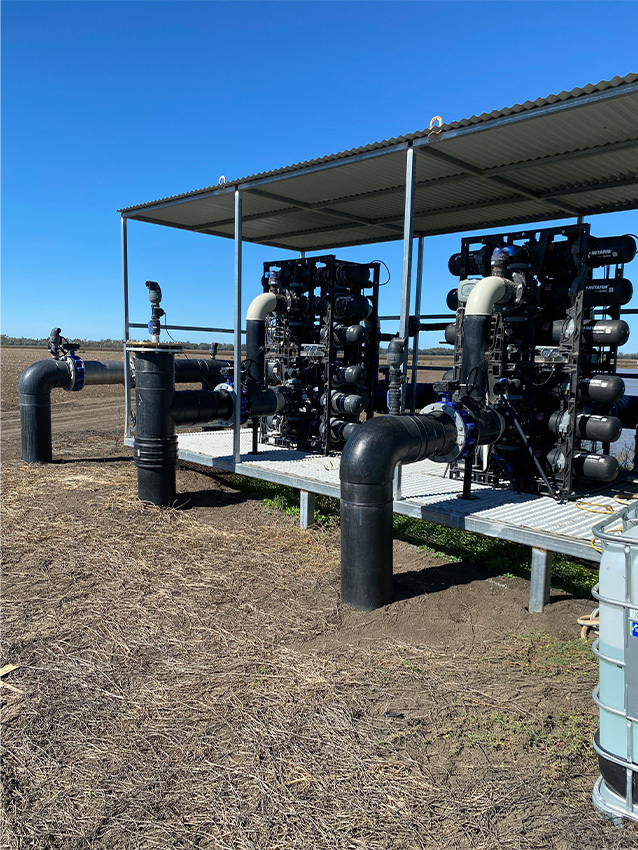
Additionally, a Netafim filtration system with 150 mm CYCLONE filters, capable of handling 2 million L per day, was installed to maintain water quality by preventing clogging and ensuring system longevity. The filtration system is crucial for filtering out debris, ensuring that only clean water is delivered to the irrigation system, enhancing performance and reducing maintenance needs.
Reliable performance and ongoing expansion
The expanded irrigation system has significantly boosted the orchard's capacity, ensuring water is delivered more efficiently while reducing energy costs. Looking ahead, Greg and his team are addressing a critical challenge: the cost and labour associated with repairing infrastructure damaged by machinery and wildlife, including kangaroos, pigs, and cockatoos.
To tackle this, they are transitioning to subsurface drip irrigation in the existing orchard, replacing some of the original lines installed in 2001. "All the research shows us that this is the most economical way forward for maintenance," Greg explained. "Once it’s buried, it cannot get damaged."
In addition to these upgrades, Greg’s team is collaborating with the orchard to establish a third pumping station, ensuring the irrigation system continues to support the orchard’s growth and evolving needs.
[Article originally appeared in the 2024 Summer edition of the Irrigation Australia Journal]