From Undersized to Futureproof: Smarter Pumping for a NSW Farm
Snapshot
- A farmer in NSW needed a higher-flow, scalable pump system to replace an outdated setup that couldn’t meet crop demands or planned expansion.
- Other challenges included managing flood risk and suction lift due to a steep riverbank, filtering river debris from water, and operating within limited power supply.
- A deliberately oversized system was specified to boost efficiency and enable future expansion.
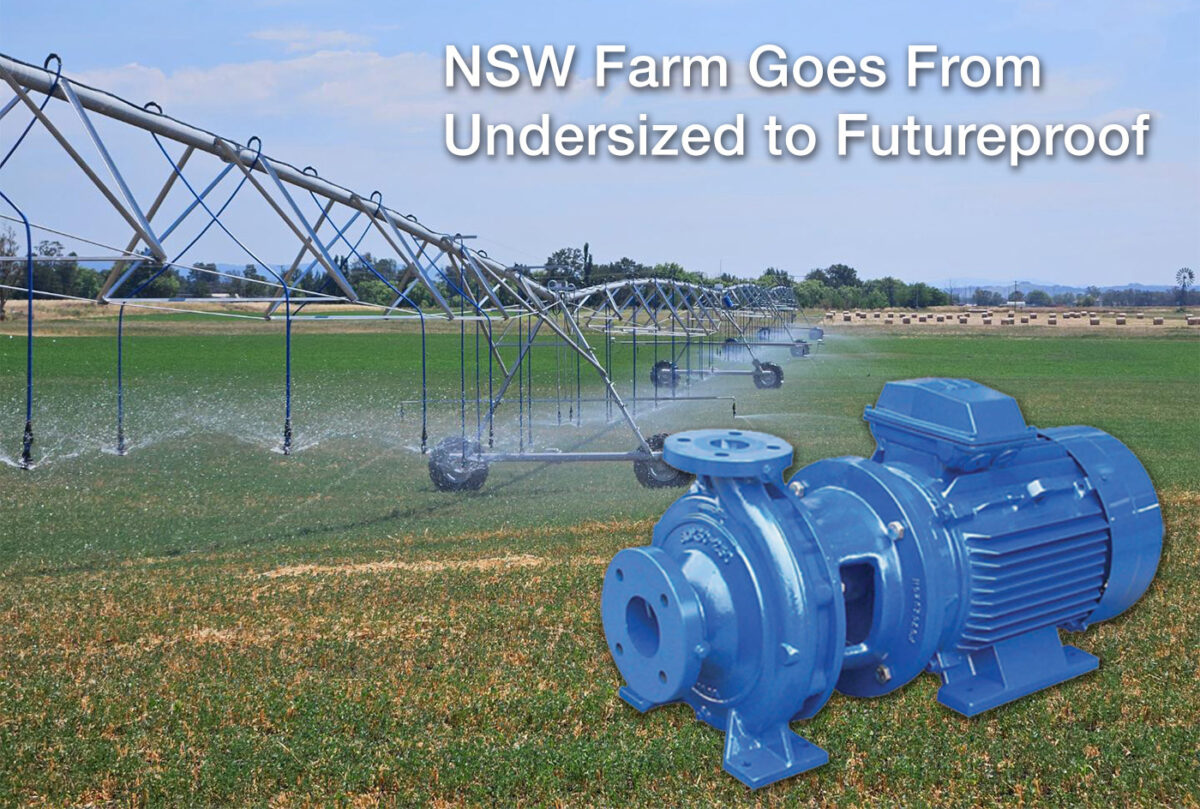
- System components included a movable Goulds ISO pump (GIFM150X125-250 model), a Snapper+ control panel fitted with Variable Speed Drive, a Programmable Logic Controller to manage system inputs and automate pump start/ stop functions. The controller also features a 25-bar pressure transducer and integrated high/ low alarms – protecting against overload/ underload conditions.
A farmer in rural New South Wales was operating an older pump and centre pivot system, originally designed for low flow rates. While the system had worked adequately for the previous owners, the new owner had shifted to growing lucerne, with plans to introduce corn and other high-demand crops. They also intended to expand irrigation to higher ground, making a more capable and scalable system essential.
The existing system operated on a three-to four-day watering cycle, which was inefficient and labour-intensive. During the hotter months, it struggled to keep up with irrigation demands, resulting in delayed and insufficient water application.
The customer needed a new pump system that could increase flow, shorten watering duration and support future expansion. Aquawest Tamworth and Brown Brothers Engineers Australia delivered the ideal solution.
From Undersized to Oversized
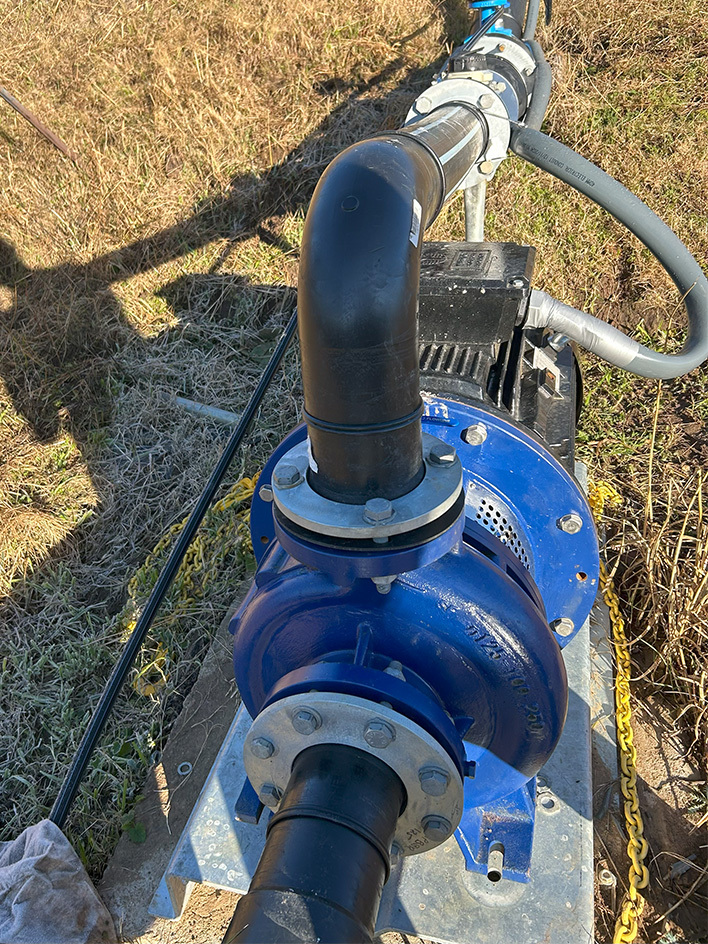
To meet the increased flow and pressure demands, a Goulds ISO pump – specifically a GIFM150X125-250 model – supplied by Brown Brothers Engineers was specified and installed. The pump was operated at 1920 RPM to improve suction performance under lift conditions, delivering better results than a standard 2-pole GIFM 125x100-200. “The system was deliberately oversized to ensure it not only met current requirements more efficiently but also allowed for future expansion without the need to purchase a new pump,” said Adam Fields, Branch Manager at Aquawest.
A Snapper+ control panel, designed and manufactured by Techsys in Australia, was also installed. Tailored for single-pump systems, the Snapper+ provides fully integrated pressure control and helps improve the overall efficiency, operation and protection of the system. A Programmable Logic Controller (PLC) was also included to manage system inputs and automate pump start/stop functions.
Fitted with a Variable Speed Drive (VSD), the Snapper+ allows the Goulds ISO pump to automatically adjust its speed according to irrigation demand. This improves performance under partial loads while allowing the flexibility to scale performance as the farm expands. The controller also features a 25-bar pressure transducer and integrated high/low alarms, ensuring consistent operation while protecting against both overload and underload conditions such as dry running.
An Uphill Battle
With the Manilla River as the primary water source, installation presented several challenges. “We had to ensure the pump was in a spot where it could be easily removed in case of flooding”, Adam explained. “And with the steep riverbank, we needed a pump capable of handling the suction lift while maintaining a low Net Positive Suction Head (NPSH), both now and when operating at higher speeds in the future”.
River water quality presented another challenge. With a high load of pine needles and organic debris, there was a risk of blockages and pump damage. To protect the system, a self-cleaning screen and foot valve were installed on the suction line. The screen filters debris before it reaches the pump, while the foot valve prevents water from draining back out of the suction pipe and helps maintain prime.
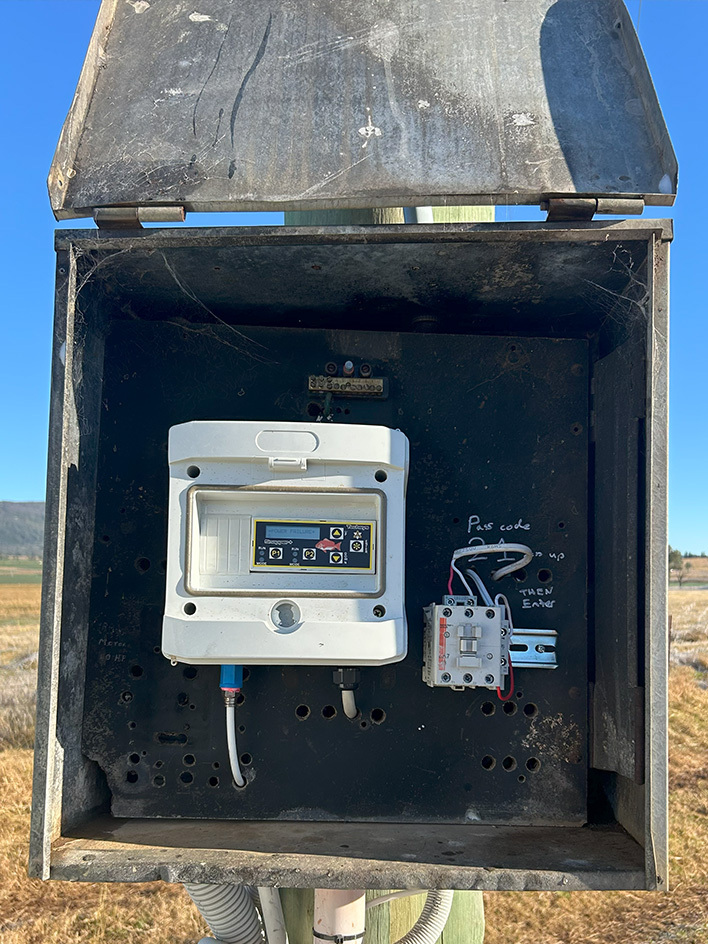
Power supply limitations also had to be addressed. The property was operating on an older electrical network with restricted capacity. “Because the customer also has a house to run, we had to be careful not to exceed the available power draw,” Adam said. “By configuring the control panel to scale back the pump’s output, we were able to lower the amp demand and keep it within a safe running point.”
This approach allowed the farm to operate both the pump and household appliances without overloading the supply. “It really shows what’s possible with modern pump and control technology,” Adam added. “When the customer expands irrigation into the new areas, they’ll relocate power lines and upgrade the supply to the controller. At that point, we can bring the pump up to full load to meet the increased demand.”
While the existing pipeline was smaller than ideal, the Goulds ISO pump’s higher pressure capacity allowed the system to operate effectively without the need for immediate pipe replacement. When the farm expands, a larger pipeline can be installed to service the new area. The ISO pump, which was intentionally semi-oversized, can operate at higher speeds when required. Once the new pipeline is in place, reduced friction losses will allow the pump to deliver more water with less effort. This forward-thinking approach future-proofs the system and eliminates the need for a new pump investment down the line.
Increased Efficiency and Coverage
With the system installed and operational, feedback has been overwhelmingly positive.
A key success of the installation was how the team adjusted pump speed on-site. After discovering that the centre pivot was delivering more water than expected, the team incrementally increased the pump speed until the desired flow and pressure were achieved.
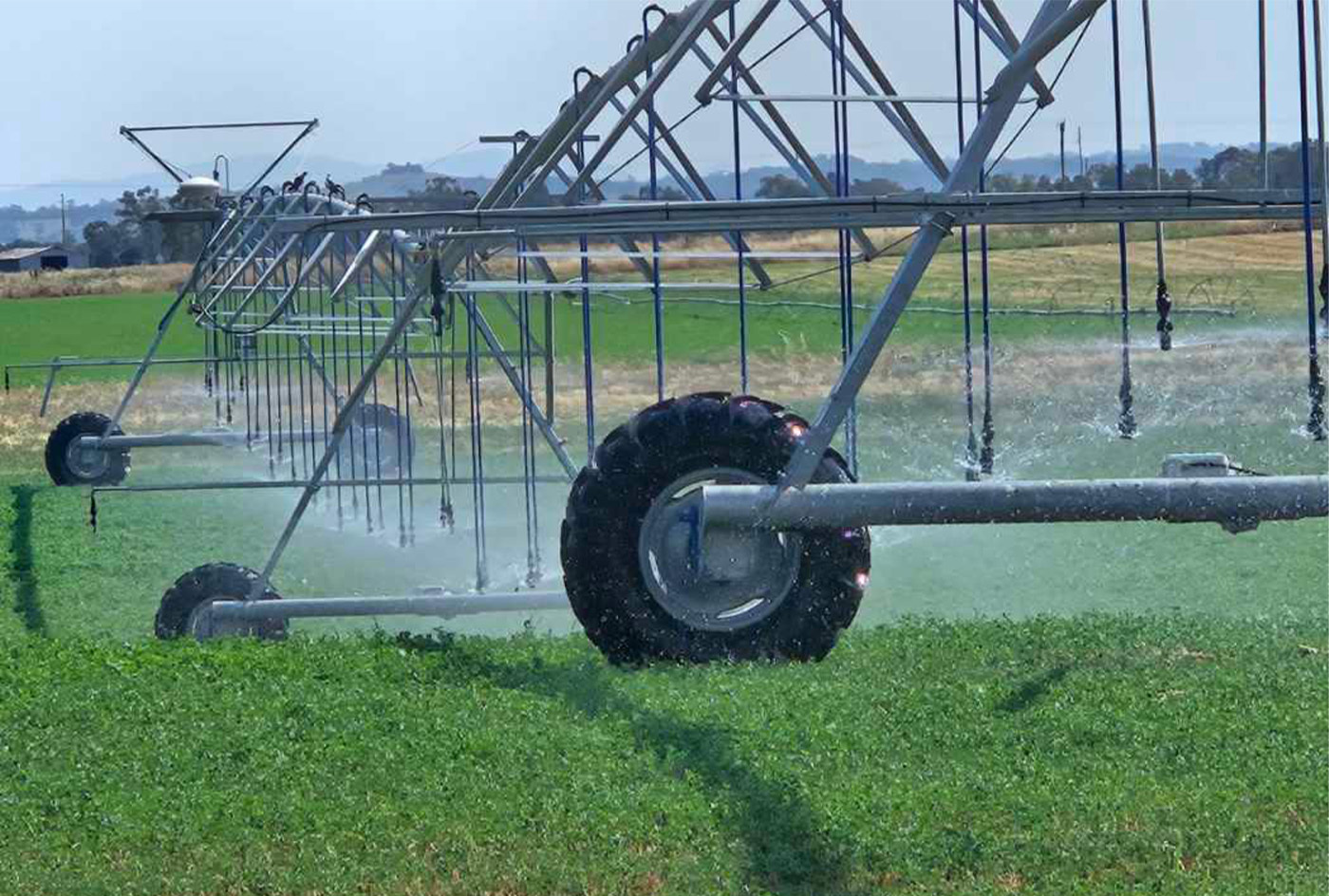
“The watering cycle has been reduced from 3-4 days to just 2 days, significantly cutting labour time and improving water application, especially during those hotter months”, Adam said. “The end-gun throw has also increased by approximately five metres, boosting coverage and even increasing the usable paddock area”.
The combination of smart pump sizing, flexible speed control, and intuitive integration with the pivot controller made this installation a standout success, proving that even challenging sites with suction and power limitations can be futureproofed with the right engineering and equipment.
[Article originally appeared in the Irrigation Australia Journal]